
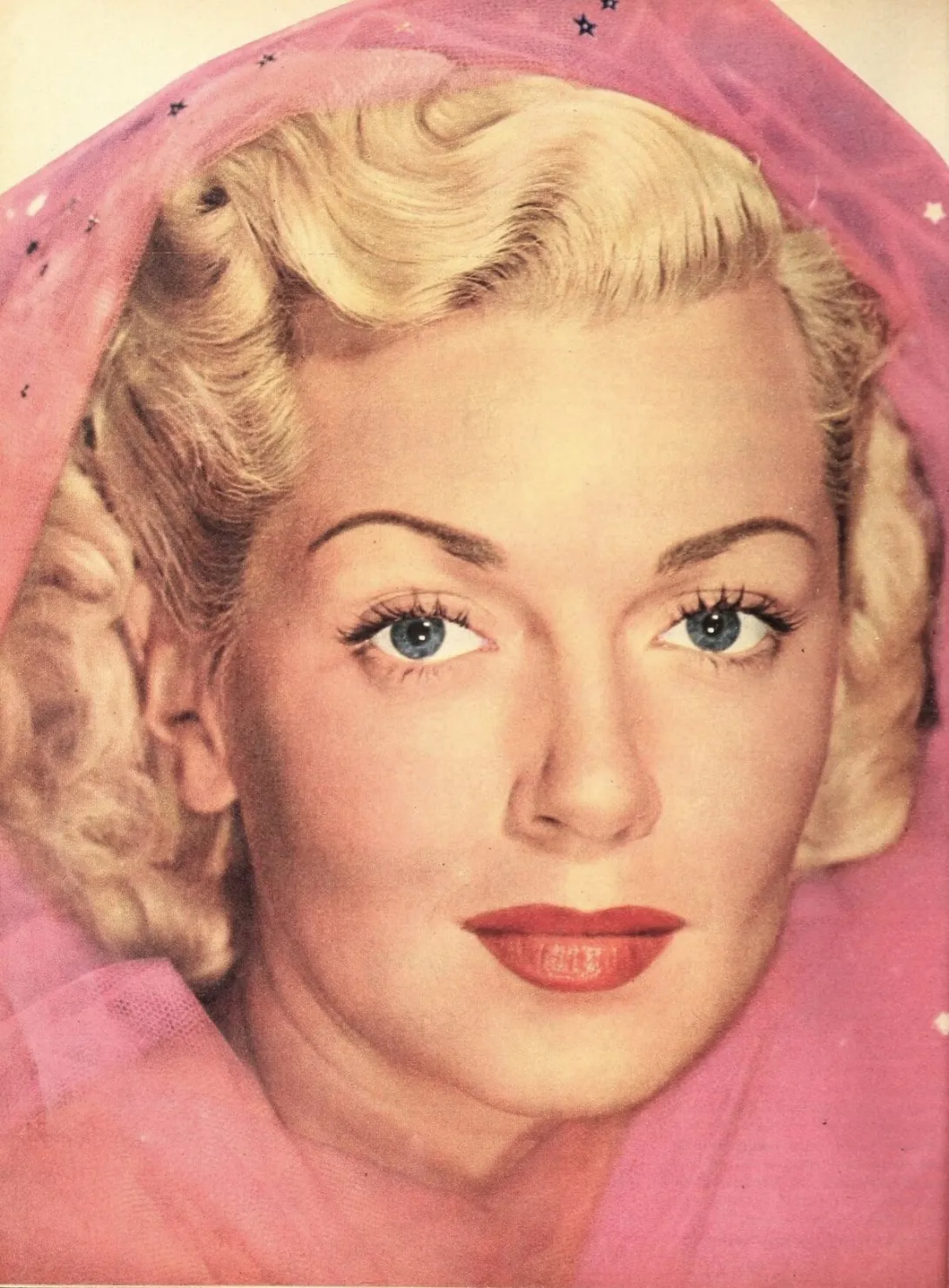
On February 8, 1921, a baby girl was born at Providence Hospital in Wallace who would become one of the most famous movie stars in the world. Her name was Julia Jean Turner, the only child of John Virgil Turner, a miner from Montgomery, Alabama, and Mildred Frances Cowan of Lamar, Arkansas, who was herself just four days shy of her seventeenth birthday. The family was living in the nearby mining camp of Burke when she was born, in the heart of an Idaho silver district then producing some of the richest ore on earth.
The Turners settled in Wallace in 1925, where John opened a dry cleaning business and worked in the local silver mines. Little Julia, known to family and friends as Judy, showed a performer's spark early: she danced short routines at gatherings of her father's Elks chapter, and at the age of three she had already improvised a dance at a charity fashion show where her mother was modeling. It was an ordinary Silver Valley childhood in a town of miners, merchants, and mountain weather, and for a few years it was a happy one.
Hard times ended it. The family left Idaho for San Francisco when Julia was six, and her parents soon separated. On December 14, 1930, her father was found murdered after winning money at a traveling craps game; the robbery and killing were never solved, and Julia was nine years old. Her mother worked exhausting hours as a beautician to keep them afloat, and the two moved often around Sacramento and the Bay Area, sometimes living on very little. Turner later said that her father's warmth, and the sense of loss that followed him, were never far from her.
In 1936, hoping a drier climate would help Mildred's health, mother and daughter moved to Los Angeles. There the most famous discovery story in Hollywood history unfolded. Julia, a student at Hollywood High School, skipped a typing class and bought a Coca-Cola at the Top Hat Malt Shop on Sunset Boulevard, where she was spotted by William R. Wilkerson, publisher of The Hollywood Reporter. The story is often misplaced to Schwab's Pharmacy, but Turner herself always corrected it. Wilkerson referred her to agent Zeppo Marx, who introduced her to director Mervyn LeRoy. LeRoy signed her to a Warner Bros. contract in February 1937 and gave her the name that stuck: Lana Turner.
Her screen debut came that year in LeRoy's They Won't Forget, a brief appearance as a murder victim that earned her the nickname "the Sweater Girl," which she always detested. When LeRoy moved to Metro-Goldwyn-Mayer in 1938, she followed him, and her turn in Love Finds Andy Hardy convinced studio chief Louis B. Mayer that he had a major star in the making. Through the early 1940s she proved him right, headlining Johnny Eager, Ziegfeld Girl, and Dr. Jekyll and Mr. Hyde, all in 1941, and starring opposite Clark Gable. By the mid-1940s she was one of the highest-paid actresses in America and one of MGM's biggest stars.
Her performance in the film noir classic The Postman Always Rings Twice in 1946 established her as a serious dramatic actress, and her popularity carried through the 1950s in films such as The Bad and the Beautiful. She received an Academy Award nomination for Best Actress for Peyton Place in 1957, and Imitation of Life in 1959 became one of the greatest commercial successes of her career. She remained with MGM for eighteen years, made her final film appearance in 1980, and charmed a new generation with a guest role on the television series Falcon Crest in 1982. Lana Turner died in Los Angeles on June 29, 1995, at the age of seventy-four.
Wallace has never forgotten its hometown star. Local historians have documented her Silver Valley childhood in detail, and her story remains a favorite here: a miner's daughter from a small Idaho canyon town who walked into a Hollywood soda shop one afternoon and came out on the road to legend.